ADC: density
dialled in to the job
ADC — Adaptive Density Composite — is an acrylic composite whose density and thickness are set for a specific part. It is not one material but a tunable recipe: the same line turns out light furniture carcasses and load-bearing worktops.
density range
cast stone
against 65 kg (84 vs 143 lb)
to order
An active
lightweight modifier
ADC combines acrylic resin, mineral filler, functional additives and the ALM modifier. ALM lowers the density of the mass without breaking its homogeneity: the material stays non-porous, hygienic and colourable.
Lightweight parts
Furniture carcasses, decorative panels and cladding where weight is the constraint.
Thermoforming
Three-dimensional shapes: curved façades, architectural elements, interior details.
Load-bearing
Worktops, sink areas, surfaces in public spaces and transport interiors.
Four components,
four jobs
Each part of the acrylic formulation is responsible for one property of the sheet. ALM is our own development — it is what makes the material lighter.
| Role | Component | What it delivers |
|---|---|---|
| Base | Acrylic resin | Monolithic body, seamless bonding, RAL colour, surface quality |
| Skeleton | Mineral filler | Stiffness, hardness and a uniform structure through the volume |
| Protection | Functional additives | Resistance to moisture, UV and temperature swings |
| Know-how | ALM — active lightweight modifier | Cuts density by 1.5–2× while keeping strength, homogeneity and hygiene |
A 760 × 3660 × 12 mm sheet
38 kg instead of 65 (84 lb instead of 143) changes the whole chain: hardware, substructure, freight, and installation by two people rather than four. The visible surface is unchanged — acrylic solid surface with seamless bonding.
Eight ways to work
the same sheet
ADC behaves like a monolith: it is cut, bent, engraved and polished without losing colour or structure. Seamless bonding gives finished pieces a single-body look.
Cutting
By hand or on CNC, with carbide tooling.
Thermoforming
Three-dimensional shapes under heat, deep draws included.
Routing
Contours, grooves, relief and edge profiles.
3D engraving
Deep decor and texture cut into the mass.
Sublimation
Image transferred into the material, not onto it.
Polishing
Gloss finish, restorable by sanding.
Matting
Soft matte texture set by abrasive grit.
Seamless bonding
Monolithic pieces with no visible joints.
Unlike particleboard and MDF the material is homogeneous and contains no wood: no swelling at the edge, no delamination, and no edgebanding — the edge is finished exactly like the face.
The line
that makes ADC
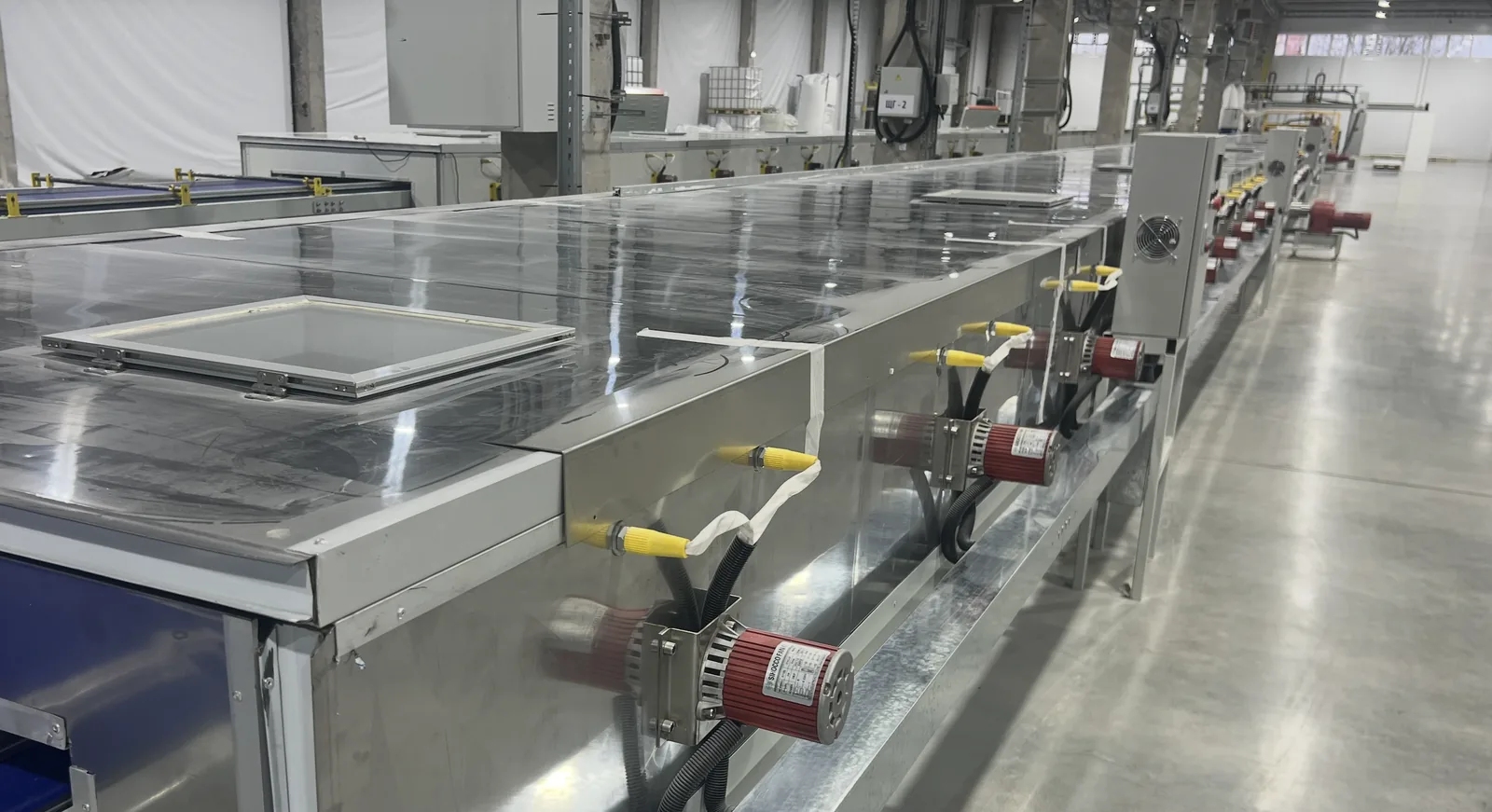
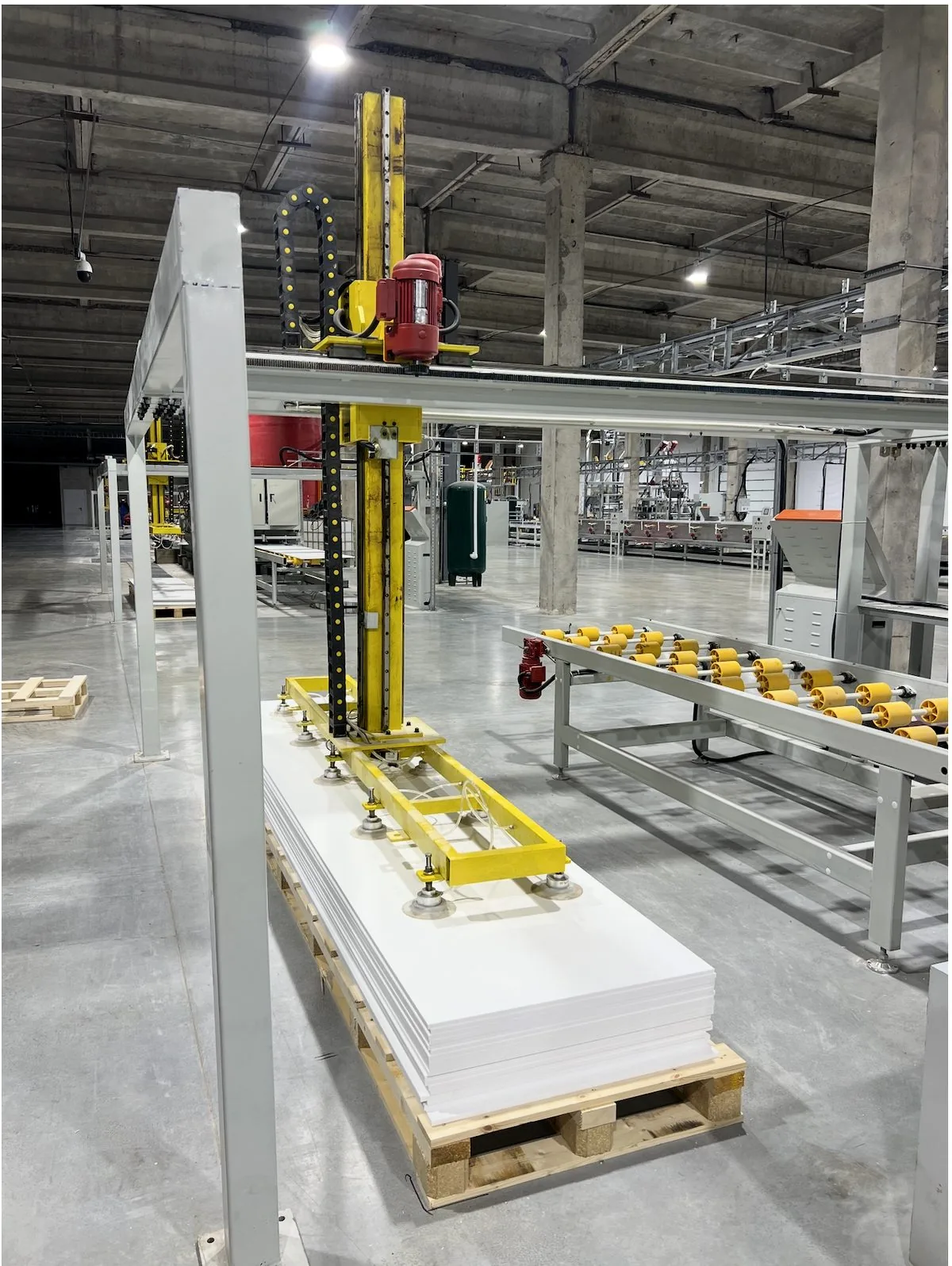
The line was engineered, built and commissioned by SARMATECH, the technology partner on this project. Every unit is built around adaptive density.
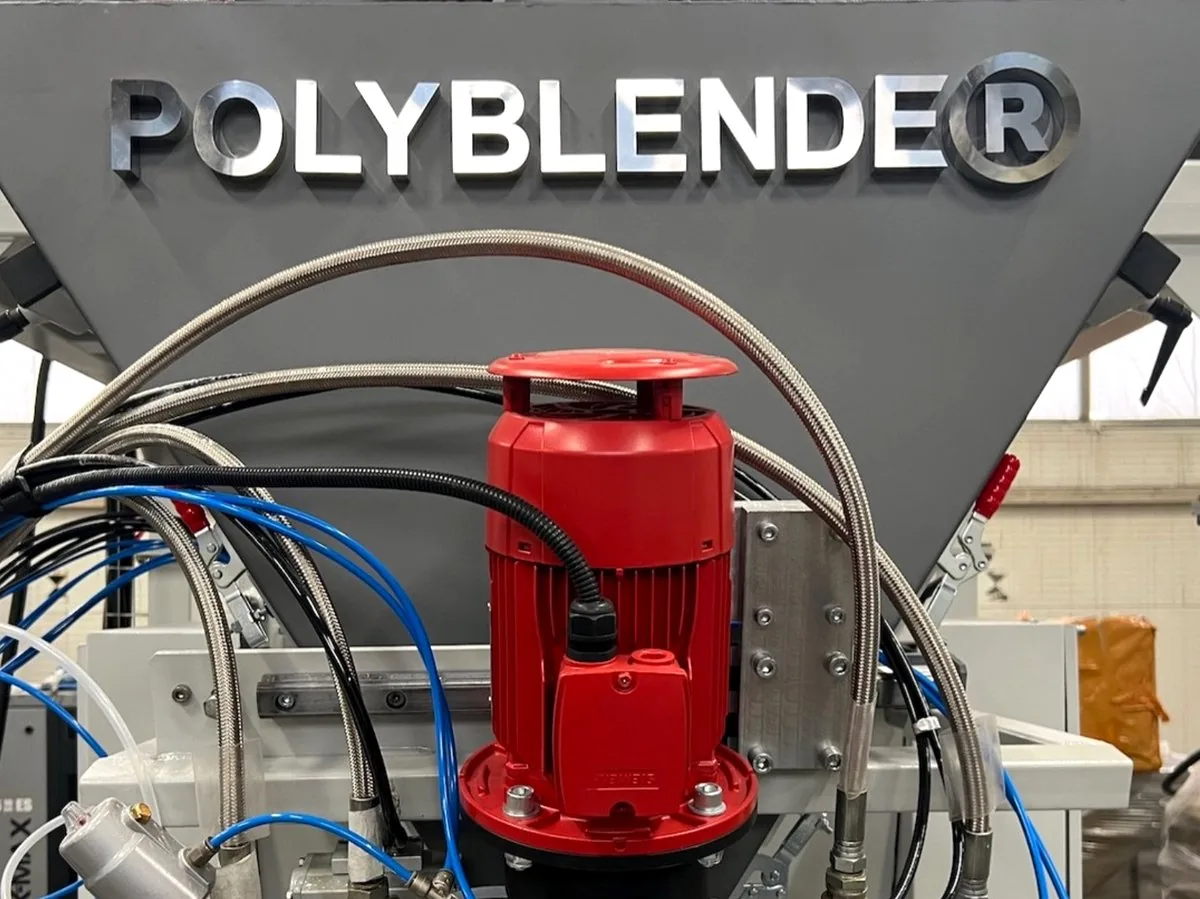
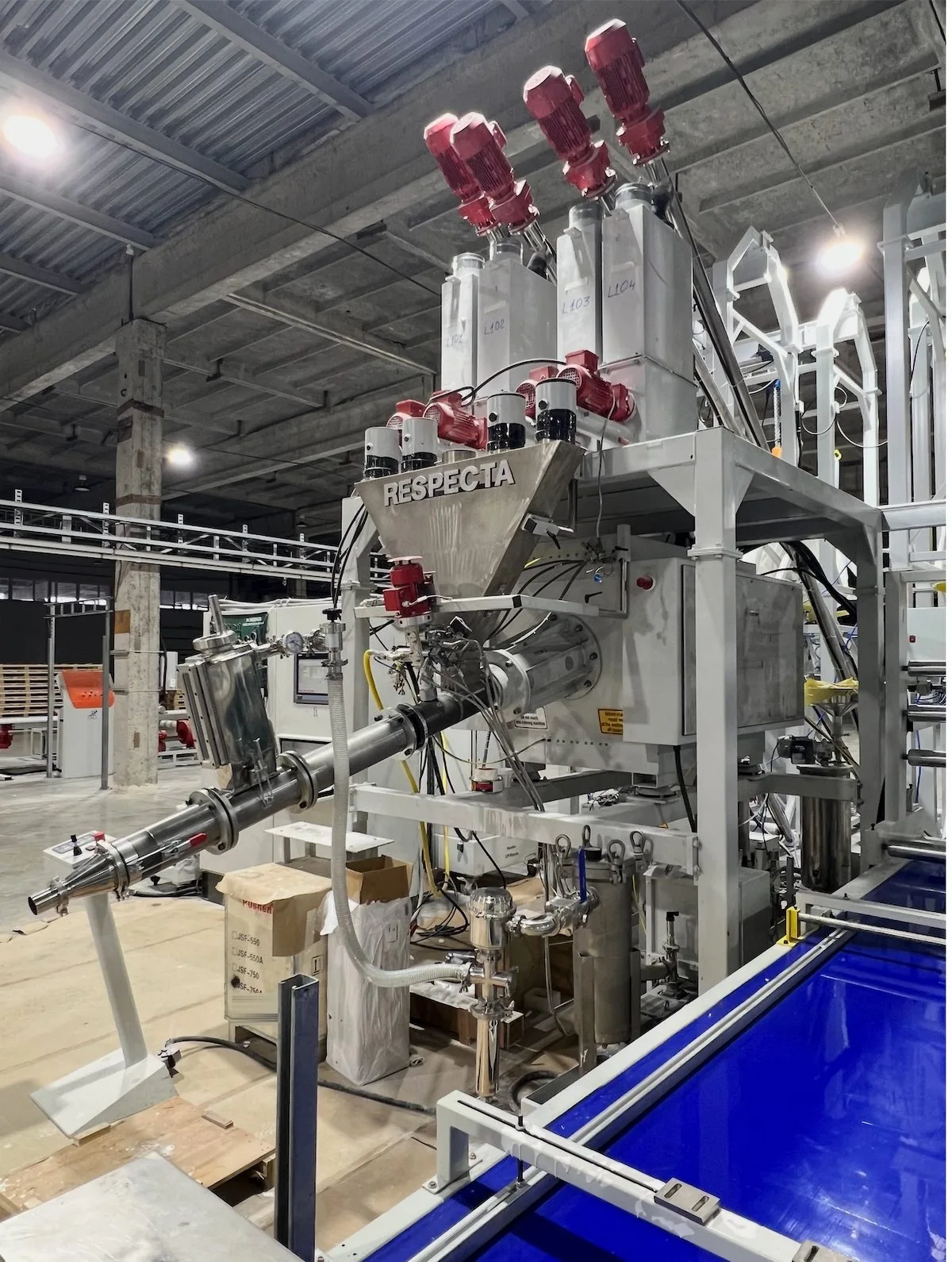
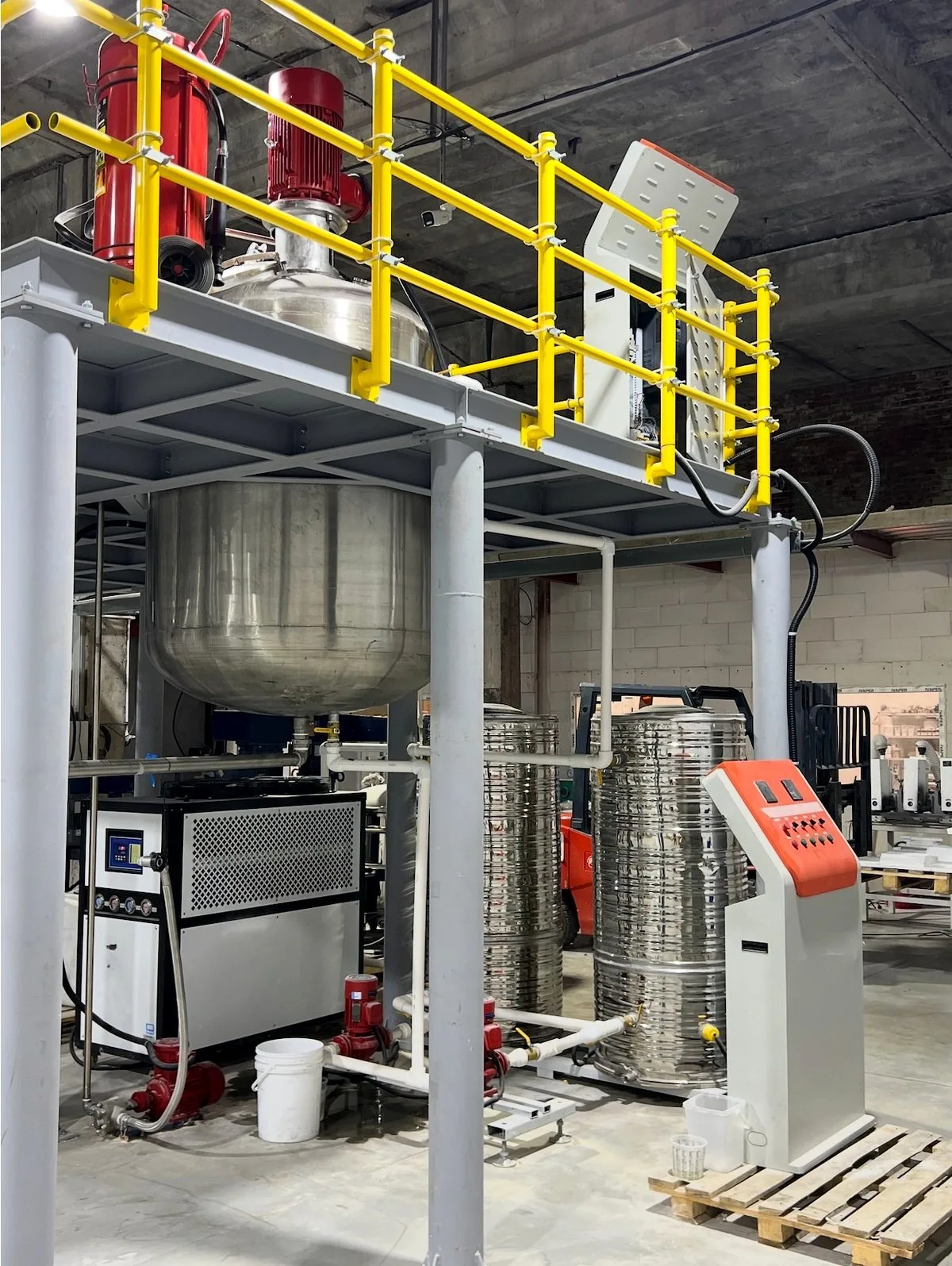
Casting line
Sheet-forming conveyor with driven sections and mass levelling.
Curing tunnel
Continuous tunnel with controlled airflow and a temperature profile.
Vacuum stacker
Gantry manipulator with a vacuum beam: gentle lifting and palletising.
Who needs ADC
Light weight, strength and workability in one material open several industries at once.
Architecture and construction
Façades, cladding, wall panels and decorative elements where the structure has a weight budget.
Furniture manufacturing
Carcasses, fronts, worktops and sink areas: one material for the visible surface and the load-bearing parts.
Industrial design
Prototypes, equipment housings, decorative parts with complex geometry.
Transport
Interiors and exterior elements for cars, trains and vessels, where mass counts.
Public spaces
Surfaces, counters, partitions, hospitality and retail fixtures.
| Density range | 900–1800 kg/m³ (56–112 lb/ft³) |
|---|---|
| Thickness | 12 · 16 · 19 mm |
| Sheet format | 760 × 3660 mm (29.9 × 144.1 in) |
| Sheet weight at 12 mm | 38 kg (84 lb) |
| Binder | Acrylic resin, styrene-free |
| Key component | Active lightweight modifier (ALM) |
| Colour | RAL palette, made to order |
| Price | On request |
ADC is an internal product-line designation, not a registered trademark, so the ™ symbol does not apply to it. Equipment partner — SARMATECH. Dedicated site for the line — adc-composite.ru.
Request samples
and supply terms
We send sheet samples, the current price list and technical documentation, and reply within one business day. If you want to go deeper into adaptive density, the dedicated site for the line collects formulation notes and application scenarios.